

Unleash your creativity
How to use
Watch our videos
How to Fabricoat a lampshade - Transform your lampshades into an illuminating oasis.
How to Fabricoat a chair - Transform your chairs into reclining retreats.
How to Fabricoat a cushion - Transform your cushions into cozy cocoons
How to use Fabricoat
Testing Fabricoat:
Before starting your project, it’s important to test Fabricoat on a small, inconspicuous area of the fabric. This will help you check the fabric’s absorbency, texture and adhesion.
- Apply Fabricoat following the product instructions.
- Allow to dry, then leave the area to cure for seven days.
- If the instructions require brushing the pile, do this while the paint is drying.
- Once cured, use a clean dry cloth to gently wipe the surface:
A very small amount of colour transfer is normal.
If the paint wipes off easily, the fabric might not be the perfect match for this product.
If you’re happy with the coverage, texture and adhesion after the test, you can proceed with your project.
Instructions:
- Ensure the fabric is vacuumed and cleaned with a suitable upholstery cleaner.
- Dampen the fabric with water. We recommend spraying water on with a trigger spray bottle, but if you don’t have one you also can wipe it on with a sponge or cloth.
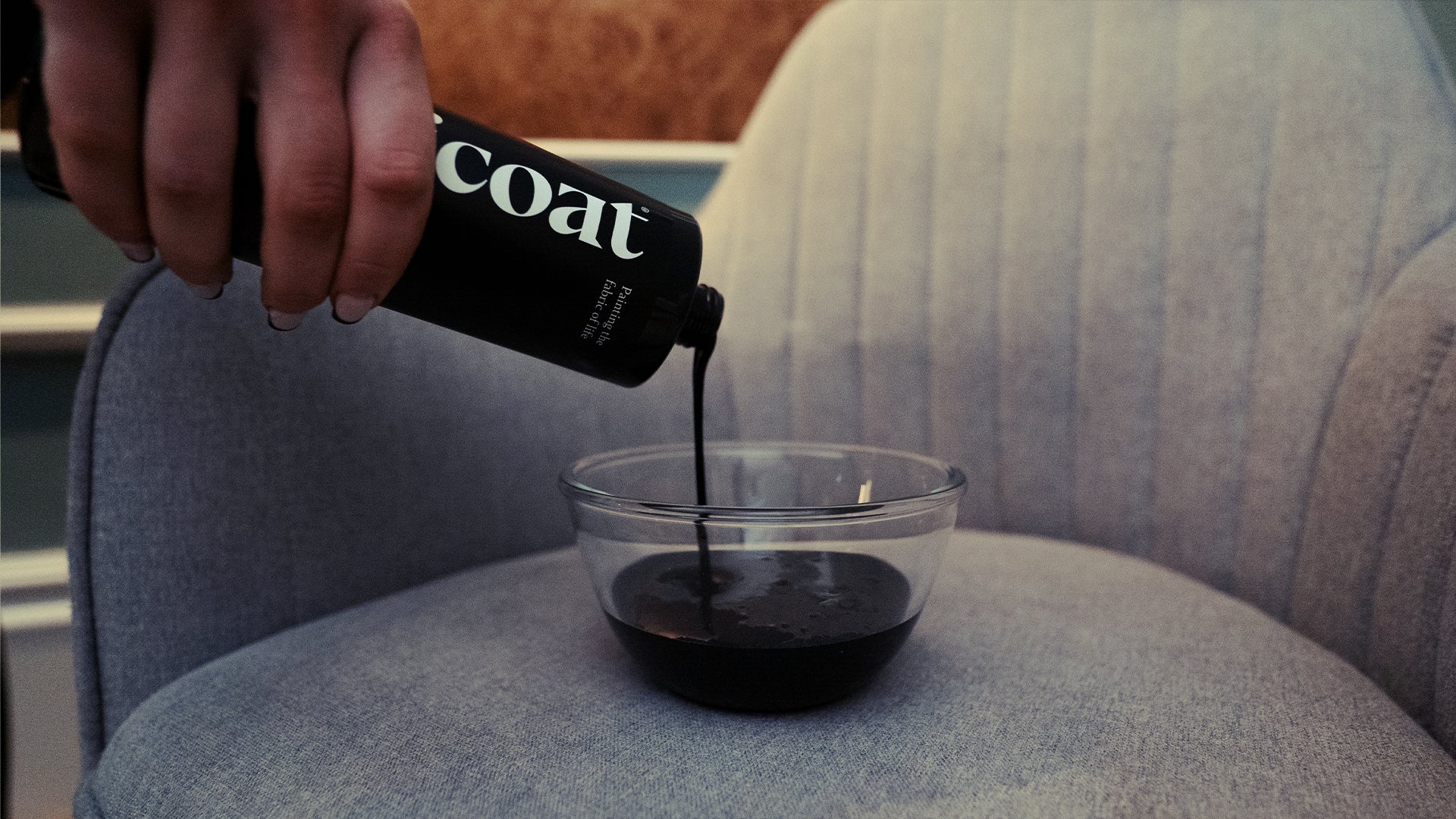
- Shake the bottle well and pour into a bowl.
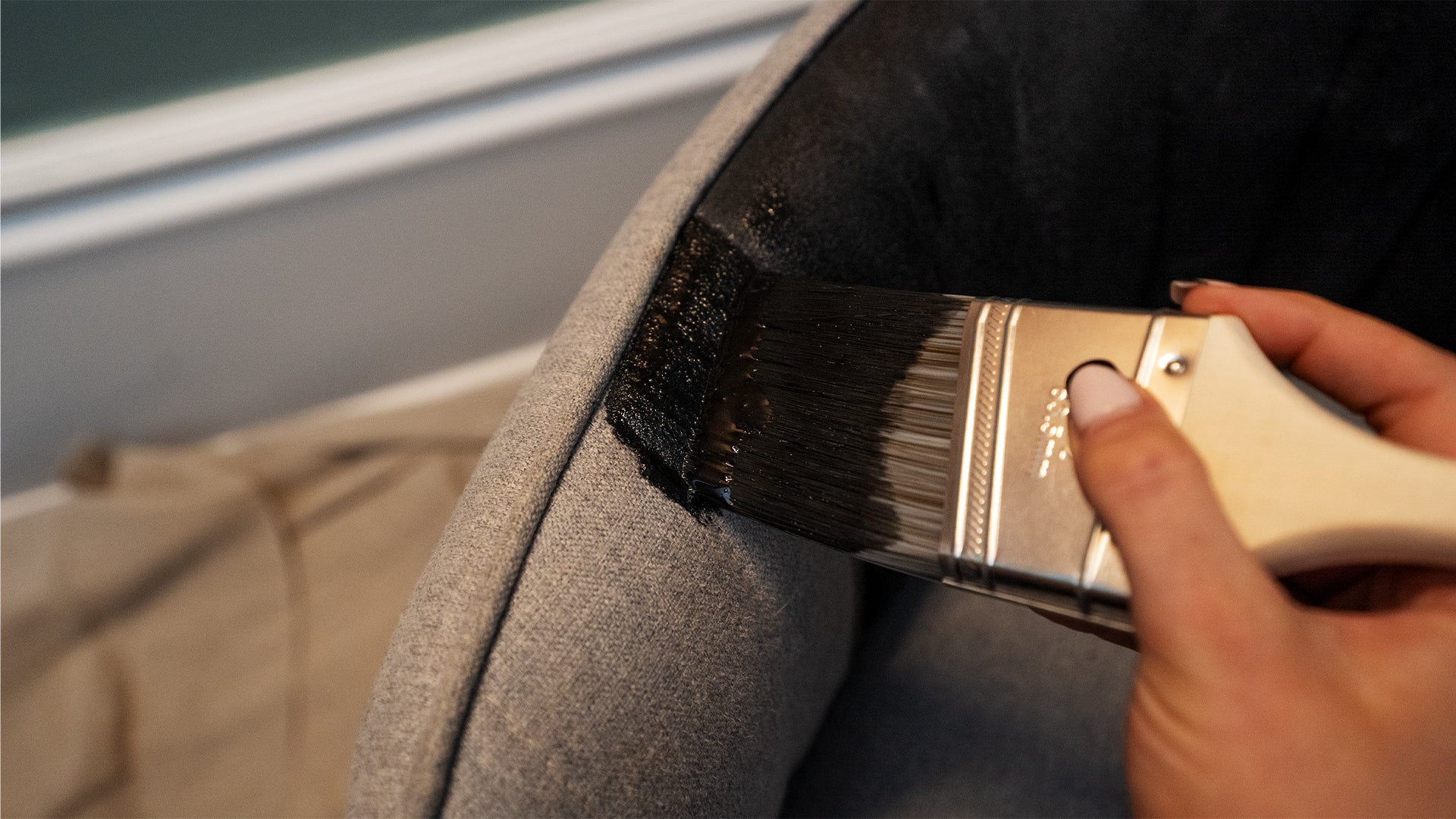
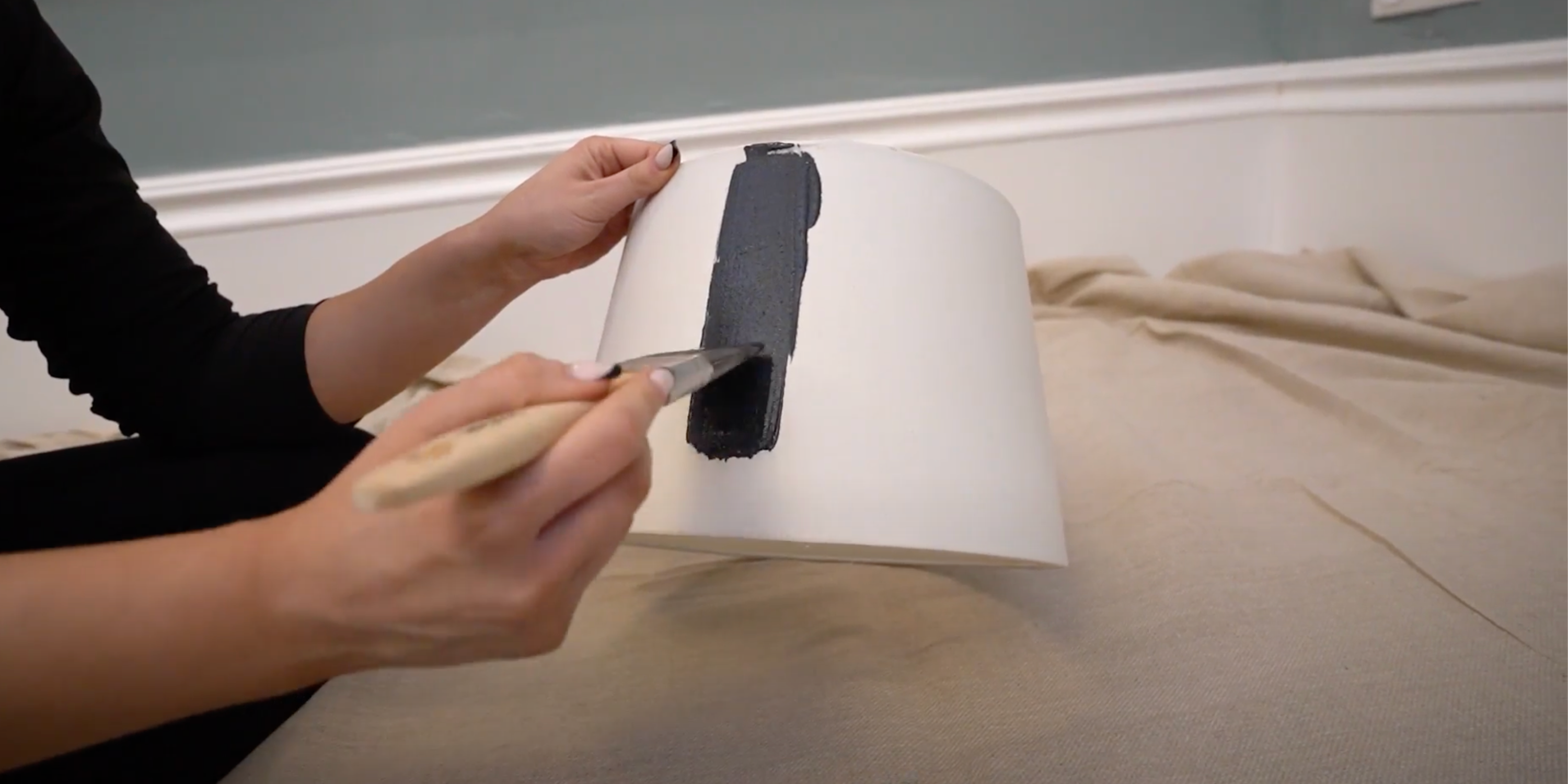
Using a paintbrush or sponge, paint Fabricoat onto the fabric and unleash your creativity. - To ensure an even coverage on textured fabrics, brush with a soft bristled brush in all directions while paint is drying.
- If needed, apply additional coats once the previous coat is touch dry.
To keep the textured fabric soft, brush again once dry. - Now sit back and admire your work.
Make sure:
- If you’re changing the colour of fabric, the original fabric must be a lighter colour than the paint you decide to use.
- If your fabric has a pile, such as velvet, then use with extra care. See our care guide for helpful tips.
- Your fabric must be absorbent so do test the fabric for water absorbency first. If it’s absorbent, Fabricoat will work.
- Fabricoat is intended for indoor use only. Fabricoat is not designed for outdoor furniture or fabrics exposed to prolonged sunlight or rain.
Using Fabricoat as a spray paint:
Spray painting fabric is easy and can be used on upholstery, soft furnishings, car interiors, clothing, footwear and all other fabric materials.
Thin Fabricoat with water to a ratio of 2:1 (two parts paint to one part water), for example 100 ml of paint mixed with 50 ml of water. This will aid penetration into stubborn fibres. Pour the solution into the airbrush and apply evenly across the fabric.
First spray from side to side, and then up and down, to get complete and even coverage. Or spray it on in any other way if you’re using it to create a pattern or specific look.
Allow the fabric paint to dry naturally or speed up the process with a hair dryer. Make sure each layer is completely dry before applying the next one; this will help achieve a smooth, even finish and prevent smudging.
Coverage:
- 250ml - will cover 3 lampshades or a cushion.
- 500ml – will cover a dining chair, footstool, or jacket.
- 1 litre - will cover an armchair, headboard or car seat.
- 2.5 litres - will cover a three-seater sofa or King bed frame.
If your fabric has a pile, such as velvet, faux-suede, chenille, draylon or microfibre you'll need to use more product. This is because there is a lot more surface area to cover on these types of fabric. We recommend ordering double the above quantities of fabric paint for these fabric types. We'd also recommend that you brush the fabric at regular intervals during the drying period to ensure that the fabric does not go stiff.
Instructions :
- Assurez-vous que le tissu soit parfaitement propre.
- Humidifiez le tissu avec de l'eau. Secouez bien la bouteille et versez son contenu dans un bol.
- Faites d’abord un test sur une zone non visible.
- À l'aide d'un pinceau ou d'une éponge, appliquez Fabricoat sur le tissu et libérez votre créativité.
- Pour une couverture uniforme, brossez dans toutes les directions avec une brosse à poils doux pendant que la peinture sèche.
- Si nécessaire, appliquez des couches supplémentaires une fois que la couche précédente est sèche au toucher (environ 2 heures).
- Pour conserver la douceur du tissu, brossez à nouveau une fois sec.
- Il ne vous reste plus qu’à admirer votre travail.
Précautions :
- Si vous changez la couleur du tissu, le tissu d'origine doit être d'une couleur plus claire que la peinture que vous décidez d'utiliser.
- Si votre tissu a des poils, comme le velours, vous devrez utiliser plus de produit car il y a davantage de surface à couvrir.
- Certains tissus d’extérieur sont revêtus d’un protecteur, veillez donc à tester d'abord l'absorption d'eau du tissu.
- S'il est absorbant, Fabricoat fonctionnera.
Couverture :
- 500 ml - couvrira une chaise de salle à manger..
- 1 litre - couvrira un fauteuil ou un siège de voiture.
- 2.5 litres - couvrira un canapé trois places.
Si votre tissu a des poils, comme le velours, le faux suède, le tissu chenille, le dralon ou la microfibre, vous devrez utiliser plus de produit. Cela est dû à une surface plus importante à couvrir sur ces types de tissus, et nous recommandons de commander le double des quantités de peinture textile mentionnées ci-dessus. Nous recommandons également de brosser le tissu à intervalles réguliers pendant la période de séchage pour vous assurer que le tissu ne devienne pas rigide.
Instrucciones:
- Asegúrate de que la tela esté bien limpia.
- Humedece la tela con agua. Agita bien el bote y vierte el producto en un bol.
- Haz una prueba en una zona no visible.
- Con una brocha o esponja, aplica Fabricoat en la tela y desata tu creatividad.
- Para garantizar una cobertura homogénea, cepilla con un cepillo de cerdas suaves en todas las direcciones mientras se seca la pintura.
- Si fuera necesario, aplica más capas cuando la anterior esté seca al tacto (aprox. 2 h).
- Para mantener la tela suave, cepíllala otra vez cuando seque.
- Ahora, relájate y admira tu obra.
Asegúrate:
- Si vas a cambiar el color de la tela, el tejido original debe ser de un color más claro que la pintura que decidas usar.
- Si la tela tiene textura, como el terciopelo, necesitarás usar más producto, ya que hay mucha más superficie que cubrir.
- Algunos tejidos de jardín llevan aplicada una protección, así que empieza por hacer una prueba de absorción de agua. Si la tela la absorbe, Fabricoat funcionará.
Cobertura:
- 500 ml – da para una silla de comedor.
- 1 litro – da para un sillón o un asiento de coche.
- 2.5 litros – da para un sofá de tres plazas.
Si la tela tiene textura, como el terciopelo, la antelina, la chenilla, el dralón o la microfibra, tendrás que usar más producto. Esto se debe a que en estos tipos de tejidos hay más superficie que cubrir. Recomendamos pedir el doble de las cantidades de pintura textil para estos tipos de telas. También aconsejamos cepillar la tela en intervalos regulares durante el período de secado para garantizar que la tela no se endurezca.
Istruzioni:
- Assicurarsi che il tessuto sia completamente pulito.
- Inumidire il tessuto con dell'acqua. Agitare bene la bottiglia e versare il contenuto in una ciotola.
- Provare prima su un'area nascosta.
- Usando un pennello o una spugna, applica Fabricoat sul tessuto e scatena la tua creatività.
- Per ottenere una copertura uniforme, spazzolare con un pennello a setole morbide in tutte le direzioni mentre la vernice si asciuga.
- Se necessario, applicare altre mani quando la precedente risulta asciutta al tatto (ca. 2 ore).
- Per mantenere il tessuto morbido, spazzolare di nuovo una volta asciutto.
- Ora potrai ammirare i risultati del tuo lavoro!
Fare attenzione:
- Se si sta cambiando il colore del tessuto, il tessuto originale deve essere di un colore più chiaro della vernice.
- Se il tessuto è peloso, come il velluto, allora sarà necessario usare più prodotto perché c'è molta più superficie da coprire.
- Alcuni tessuti da giardino hanno già un protettore, quindi prima dell'utilizzo controllare l'assorbimento dell'acqua. Se è assorbente, Fabricoat funzionerà.
Copertura:
- 500ml: copre una sedia da pranzo.
- 1litro: copre una poltrona o un seggiolino per auto.
- 2.5 litros: copre un divano a tre posti.
Se il tessuto da trattare è peloso, come velluto, finto scamosciato, ciniglia, dralon o microfibra, sarà necessario utilizzare maggiore quantità di prodotto. Questo perché c'è molta più superficie da coprire su questi tipi di tessuto. Per questi tipi di tessuto, si consiglia di ordinare il doppio delle quantità di vernice sopra menzionate. Si consiglia anche di spazzolare il tessuto a intervalli regolari durante il periodo di asciugatura per garantire che il tessuto non si irrigidisca.